Most documents from the height of Civil War memory and commemoration efforts in Mississippi and the larger United States are from the early 20th century. Because of this, they won't be found in the CWRGM collection, which ends in 1882. But CWRGM documents can still help site users think about how the
Lost Cause helped erase the memory of white Unionism in Mississippi, of Black military service in the Union armies/navy, and of tremendous socio-economic advances by African-Americans during the era of Reconstruction that were systematically attacked as that era came to a close. The documents in this section help students, educators, researchers, and the public explore the wartime experiences that the Lost Cause helped erase.
Some of the earliest examples of wartime dissent that surface in these sample documents occur shortly after the Confederacy passed the Conscription Act, forcibly drafting men into Confederate military service. Instances of this appear in
July 1862 in Kemper County and
August 1862 in Lowndes County, MS, and you'll notice that they mostly address perceived inefficiencies of the law or its unfair enforcement. A great example of this is the
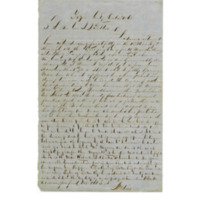
July 1862 petition from Jasper County opposing illegal implementation of the draft, but not the draft per se.
In October 1862, however, the Confederate legislature enacted what became known as the 20 Slave Law to ensure that selected slave holders could remain at home to police enslaved populations and ensure that agricultural production continued. For a summary on this exemption and the frustrations it caused, including complaints that this was now a "rich man's war but a poor man's fight," see
this short essay. Evidence of the growing resistance to conscription in Mississippi surfaces in these sample documents as early as the spring and summer of 1863, with an account from Canton, MS, referencing the
public's sympathy for deserters and another from Union Church in Jefferson County referencing the public's unwillingness to assist in the
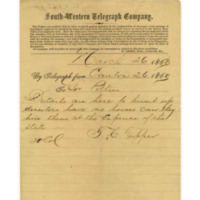
arrest of deserters. As late as the spring of 1865, documents can be found in the collection, like this one from
Enterprise, MS, noting the need to round up deserters and locals' unwillingness to assist in the process.
On the question of Unionism in Mississippi during and immediately following the war, historians estimate that approximately 500 white Mississippians serve in the
Union Army and Navy, while others expressed their Union sympathies as civilians. Several examples of this exist in these sample documents, but not necessarily in this "Memory and Commemoration" theme. You can find them by doing a keyword search for "Union" at the top of any page in the exhibit. One example of wartime Unionism is found in
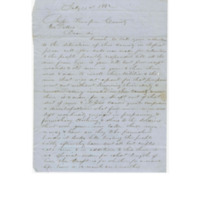
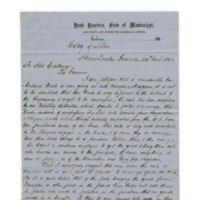
James H. Pierce's July 1865 letter to Governor Sharkey, seeking an appointment in recognition of Pierce's loyalty as a "union man" during the war. A
similar account of longstanding unionism arrived in Sharkey's office that month from a Macon, MS man. Former Confederates noted Unionist support as well, as this
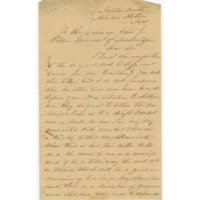
June 1865 letter from Ripley, MS demonstrates. O. Davis was a former Confederate who accepted that defeat, noting, "the institution of slavery was staked upon the result of the war. We have played and lost and I, for one, am willing to surrender this stake." But Davis protested the idea that Mississippi men who fought for the Union might receive political appointments in the postwar period, insisting that "There is, and will be, for some time much prejudice against Those Southern men who have been in the U.S. army."
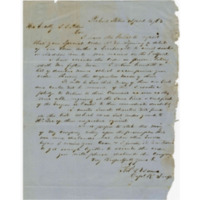
One of the most powerful documents in this theme is the
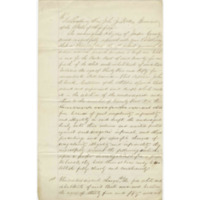
May 1865 address by Mississippi's last Confederate governor, Charles Clark. CWRGM is digitizing governors' Legislative Ledgers last, so this image is actually from digitized microfilm and doesn't reflect the quality standards of the project. It's also difficult to read, as you will notice from the incomplete transcription. But if you scroll down a bit, you'll see that this is a speech by Governor Clark to the Mississippi House of Representatives. The state had just surrendered to Union forces and all sitting office-holders, from the governor on down, were sent home, with some concerned that they might be arrested. Clark's speech reflects his determination to shape how history remembers their role in the Confederacy, despite insisting that he "shall leave the story of this contest to after times & the pen of the impartial Historian. Its History can not now be written." Instead, Clark presented one of the earliest histories of the war, listing its causes, the best approach for the future, and how the state's role in the Confederacy should be remembered.
(Written by Susannah J. Ural, Ph.D.)